
Why am I spiritually drained even though I keep showing up?
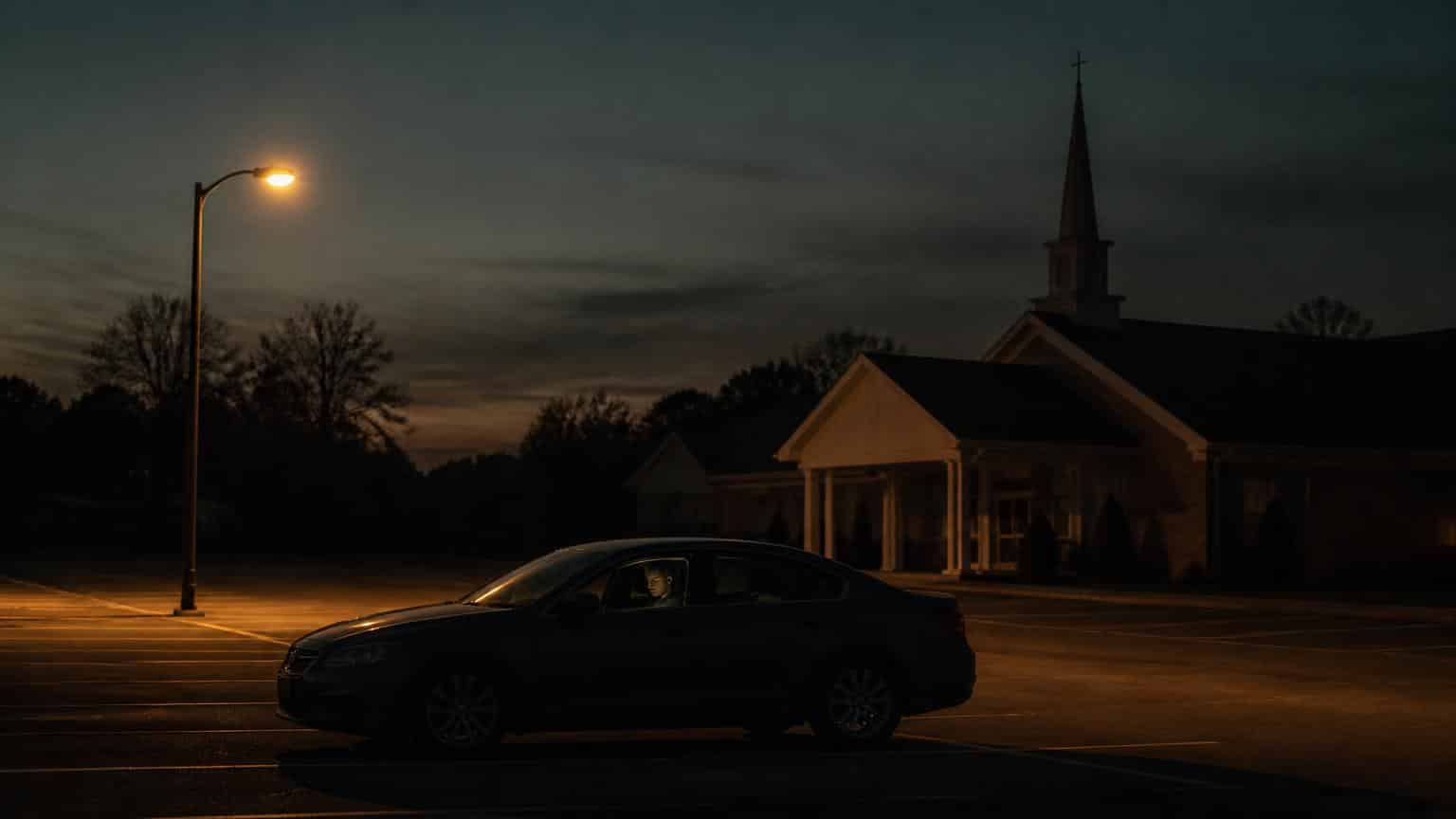
For eleven minutes, I stayed in the church parking lot with my engine idling. After that, I went home.
No one noticed. No one sent a text. I assume the service carried on perfectly well without me. What surprised me wasn’t the guilt; I knew that would come. It was the absence of almost everything else. The room I once inhabited seemed to have had its volume turned nearly all the way down.
Maybe you found this page after searching why do I feel spiritually exhausted at some hour you don’t especially want to disclose. If so, I won’t pretend there’s a solution waiting in the opening paragraph. Most promises like that aren’t honest. What I can do is stay with the question for a while, because it deserves more attention than people usually give it.
A weariness that sleep cannot reach
Ordinary fatigue usually responds to something. Get some sleep. Eat food that didn’t come from a gas station. By Thursday, you start feeling human again.
Spiritual exhaustion follows different rules. Nine hours of sleep may leave you waking beneath the same emptiness, planted on your chest like a cat with no intention of moving. You take the trip. You attend the retreat with decent coffee and an acoustic guitar. Then you return, and the feeling is still in the car waiting for you.
What gets called spiritual fatigue isn’t mainly a lack of energy. It’s a loss of connection. The wires seem loose: you continue speaking the familiar words, but you can’t tell whether anyone is receiving them.
That silence, more than the sadness, is often what frightens people.
Why do I feel spiritually exhausted when my life is technically okay?
This is the form of the question I encounter most often. It can make a person feel as though they’re losing their mind.
From the outside, your life checks the right boxes: employment, a place to live, people who would realize you were gone. There is no obvious disaster to name. Still, you feel hollowed out. With no visible explanation, you turn the blame inward. Maybe your faith is defective. Maybe you’re spiritually lazy and should simply force yourself through it.
For whatever my conclusion is worth, I rarely think spiritual exhaustion comes from one enormous event. More often, it grows from a hundred little withdrawals made from an account no one has been replenishing.
You spend six uninterrupted years being the strong person in your family. You answer questions about God even though, privately, you no longer feel certain about the answers. You pray over one situation for so long that the prayer begins to sound like a shopping list. On Sunday, you bring a version of yourself to church that Wednesday-you would barely recognize.
A résumé won’t show any of that. Every bit of it still has a cost.
Is it spiritual fatigue, spiritual burnout, or another problem?

Those terms are often treated as synonyms, though they aren’t exactly the same. Finding more precise language helped me far more than I thought it would. A name doesn’t repair the problem, but asking for help is difficult when you can’t say what the problem is.
One necessary caution: none of this amounts to a diagnosis. A blog post isn’t a doctor, and neither am I. Think of it as a set of words. Keep whichever ones fit and set down the ones that don’t.
| What it could be | How it tends to feel | What often helps at first |
|---|---|---|
| Ordinary exhaustion | Your body is tired and your patience is thin. Rest makes a real difference. | Food, sleep, and a weekend without plans |
| Spiritual fatigue | Belief remains, but prayer feels empty. You’re moving through the routine. | Reducing input, making the practice smaller, and telling one person the truth |
| Spiritual burnout | Things you once loved now stir resentment. Church puts you on edge, and cynicism is beginning to settle in. | Withdrawing from roles rather than merely cutting individual tasks |
| Something clinical | The flatness lasts for weeks. Your appetite and sleep have changed. Nothing offers relief, whether spiritual or not. | An honest discussion with a counselor or doctor |
Pay attention to that final row. In 2019, the World Health Organization included burn-out in its international classification as an occupational phenomenon resulting from chronic workplace stress that hasn’t been successfully managed. The Mayo Clinic’s overview of job burnout lists signs most people would immediately recognize: depleted energy, cynicism, and the gradual shift into doing little more than getting through the day.
In other words, what appears to be a crisis of faith may also be a nervous system with nothing left in the tank. Sometimes both are happening. Acknowledging that isn’t an excuse; it’s part of being human.
The real trouble was performing
I need to say this carefully. I’m not arguing that your spiritual habits are harmful or that you should abandon them.
There is, however, a way of practicing faith that slowly consumes the person doing it.
At some point, my private time with God became a scorecard. Had I read enough? Had I experienced enough emotion? Had I started early enough for it to qualify? It turned into an audition before an audience of one, and I felt fairly certain that audience wasn’t impressed.
Burnout makes sense under those conditions. No relationship can survive when only one person is perpetually trying out for a part.
During that period, I did something that still feels strange: I reduced the whole practice to almost nothing. Two minutes, without a journal, a reading schedule, or an objective. I only sat there and felt foolish. Over six months, that small and slightly humiliating practice helped me more than all my earlier ambition had.
Make of that what you will. It’s one man’s experience, not research.
Elijah beneath the tree
The part of Elijah’s story that stays with me isn’t the fire on the mountain.
It’s what follows. Soon after the greatest spiritual victory of his life, he ends up in the wilderness asking God to let him die. Then he lies beneath a bush and goes to sleep, which may be the most understandable moment in the entire book.
How does God respond?
There is no sermon and no demand to explain where his faith went. First comes food, then sleep, followed by more food. The conversation about theology waits until later, and even then it arrives softly.
I don’t want to force that scene to carry more than it should. Still, I can’t miss how God responds to the man’s weariness: as a genuine need to be fed, not a moral defect to be fixed. That changed how I understood a lot of things.
It’s also worth noticing that spiritual exhaustion can arrive after the summit rather than in the valley. A major move, a serious commitment, an intense stretch of service—and then the collapse. If that describes you, it doesn’t mean you’re damaged. It means you’ve used yourself up.
What spiritual dryness does not mean
I once accepted several ideas that I eventually discovered were false.
Dryness is not evidence that God has gone away. Emotions resemble weather, and weather proves little except what the conditions are right now. During a difficult season a few years ago, I stopped feeling much toward my closest friend. He remained my closest friend throughout it.
Nor is it necessarily punishment. For months, I searched my life for the concealed sin that surely explained the quiet, like someone inspecting his own fuse box while the entire city is blacked out.
It isn’t forever, either, although I won’t offer you a schedule. For some, it passes in weeks; for others, it takes years. Older writers called it a dry stretch and generally declined to predict its duration. That used to irritate me. Now it strikes me as truthful.
The person speaking there hasn’t escaped the desert. He remains thirsty inside it, and he continues talking. You are allowed to do that.
A few small things that helped—somewhat
This isn’t going to become a checklist. For many of us, checklists helped create the problem.
A handful of changes did loosen something, though. I started by reducing what I consumed. I quit listening to podcasts about becoming a better Christian while washing dishes. Information had never been scarce in my life; open space had.
After that, I was honest with one person—not an entire group, just one guy across a table of tacos. I finally said it aloud: I don’t feel anything anymore, and I’m afraid that means something. He offered no repair plan. He said, “Yeah, me too, last year.” My chest relaxed by perhaps ten percent.
Eventually, I paid attention to my body. I took walks, ate actual meals, and established a bedtime. It was almost offensive to discover that ordinary physical care could affect something I considered a spiritual crisis. But it helped, so I no longer act precious about the distinction.
The tiniest practice is also the one I’ve kept. On days when I have nothing to tell God, that’s what I tell him: “I’ve got nothing today.” It takes two seconds. I believe it counts. I’m nearly certain it does.
What people leave out when they talk about spiritual awakening
Spiritual awakening is usually advertised as a sunrise: clarity arrives, the mist disappears, and everything suddenly makes sense.
My own experience—and what I’ve seen in many other lives—is less impressive but more helpful. Awakening often begins with something falling apart. The faith structure you assembled at 19 no longer holds, and it feels as though faith itself is gone. In reality, you may simply have outgrown the beginner’s kit.
The earlier version was powered by certainty. What comes next moves more slowly. There is less flame and more steady walking; less “I feel God” and more “I’m still here, even though I can’t fully explain why.”
I won’t claim this is an upgrade anyone would voluntarily select. Collapse isn’t something people enroll in. Yet everyone I’ve known whose faith I genuinely wanted had passed through one.
Two earlier writers who already understood
Two writers gave me more help than anything released during the past decade, largely because neither was trying to market a dramatic breakthrough.
More than a century ago, Andrew Murray repeatedly returned to the same thought: closeness with God is not a task finished through effort. Using the image of a vine and branch, he pointed out that branches don’t strain themselves into producing fruit; they remain attached. The idea sounds easy until you see how much strain your own spiritual life contains.
A.W. Tozer spent considerable time warning that accurate ideas about God can replace God’s actual presence. Then, despite believing all the correct things, a person wonders why nothing is felt. His concern was that someone could possess sound doctrine and remain hungry. The hunger, in his view, was the honest element rather than the failure.
There is an unexpected comfort in that. Both writers expected seasons of dryness. Neither saw them as proof that you had ruined everything.
Those words extend an invitation; they don’t deliver a performance evaluation. Apparently, I need to keep learning that distinction.
Still, I’m here. Tonight, that’s everything I have.
In Jesus’ name, Amen.”
Questions I often hear about spiritual exhaustion
How long can spiritual exhaustion continue?
There is no reliable answer, and I would distrust anyone who claimed otherwise. Some people say it lasted several weeks. Others describe a couple of years, particularly following bereavement or a damaging church experience. Among the people I’ve spoken with, most say the exhaustion began changing before it fully left. The panic eased first; afterward, the numbness gradually became less dense.
Are depression and spiritual burnout the same thing?
No, although their overlap can make them difficult to distinguish. Burnout is usually linked to certain responsibilities or environments. It may hit when you enter church but leave you alone during a Saturday hike. Depression is more likely to travel everywhere with you, dulling even the activities you once enjoyed. When that flatness reaches across your whole life and continues beyond two weeks, have an actual conversation with a professional rather than taking an online quiz.
Should I take a break from church when I’m this exhausted?
It may be time to stop doing church without cutting yourself off from people. Leaving a building is not the same as stepping down from six volunteer positions, the small group you run, and the cheerful identity you wear in the lobby. Many of us become exhausted by the performance and then accuse faith itself. Let go of the roles first; afterward, notice what remains.
If you’re still reading
I can’t know where tonight finds you. You might be sitting in the car. You may be in bed holding your phone much too close to your face—a habit I repeat constantly and regret every time.
If I could place one thing in your hands, it would be this: choose the smallest next action available. Sit quietly for two minutes. Send one message to the friend you’ve avoided. Speak one truthful sentence to God when no one else can hear. Small actions aren’t magical. They are simply what exhausted people can carry, and there is nothing wrong with that.
We created something brief for people who are in precisely this place. There is no product to purchase and no sales pitch waiting afterward. If you’d like it, you’ll find it below.
If you don’t, that’s all right as well. I hope the coming hour weighs a little less than the one before it.
Leave a Reply