
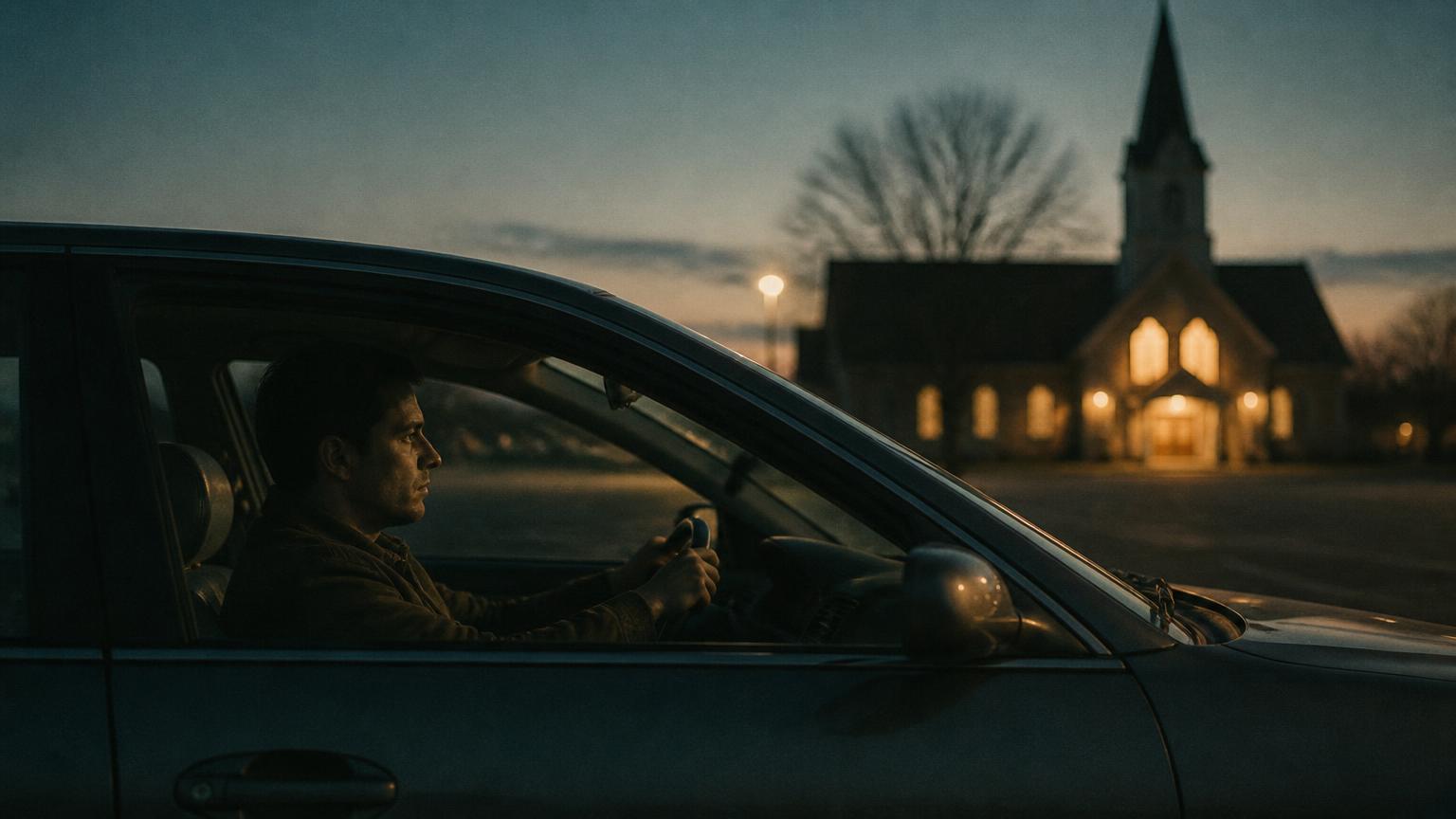
You got as far as the parking lot. That’s the part people rarely mention.
The engine is still running. Perhaps forty feet separate you from the building, and you know in advance which entrance catches, which greeter is going to embrace you, and what opening song they’ll play. Still, you remain in the driver’s seat. After eleven minutes, you pull out and head somewhere else for coffee.
No one sees you leave. Truthfully, that’s what hurts.
When church has burned you out, there probably wasn’t a single sweeping choice. No dramatic departure. No farewell letter. No theological breakdown complete with footnotes. Instead, you became less talkative, then increasingly weary. You slept late one Sunday, nothing collapsed, and a part of you thought, huh.
You cannot burn out over something you never valued
I keep returning to this thought: caring and burnout are not opposites. Burnout is one possible result of caring for too long while never looking at the fuel gauge.
The hobby you attempted twice is not what burns you out. Burnout comes from what claimed your Tuesdays and caused you to reorganize your life. Often, church burnout hits the most faithful attendees the hardest.
If you can bear to hear it, that is an odd sort of praise. Your fatigue shows that something mattered deeply to you.
How spiritual burnout really feels on an ordinary Tuesday
Burnout is often imagined as sobbing inside the sanctuary. Most of the time, it feels far less dramatic—and much more numb.
A message from somebody at church appears, and your chest constricts before you even read it. You hear yourself answer, “Sure, I can cover that,” but the voice hardly sounds like yours. Worship music comes on while you’re driving, so you lower the volume. You do not switch it off, because turning it off would seem meaningful; turning it down can pass as nothing.
There is little noise to spiritual burnout. It is more like gradually vanishing from your own existence. The calendar remains intact, while the person maintaining it slips away.
Prayer begins to resemble speaking into an air vent. You continue praying; you simply no longer anticipate a response coming through.
Ministry burnout is a different creature
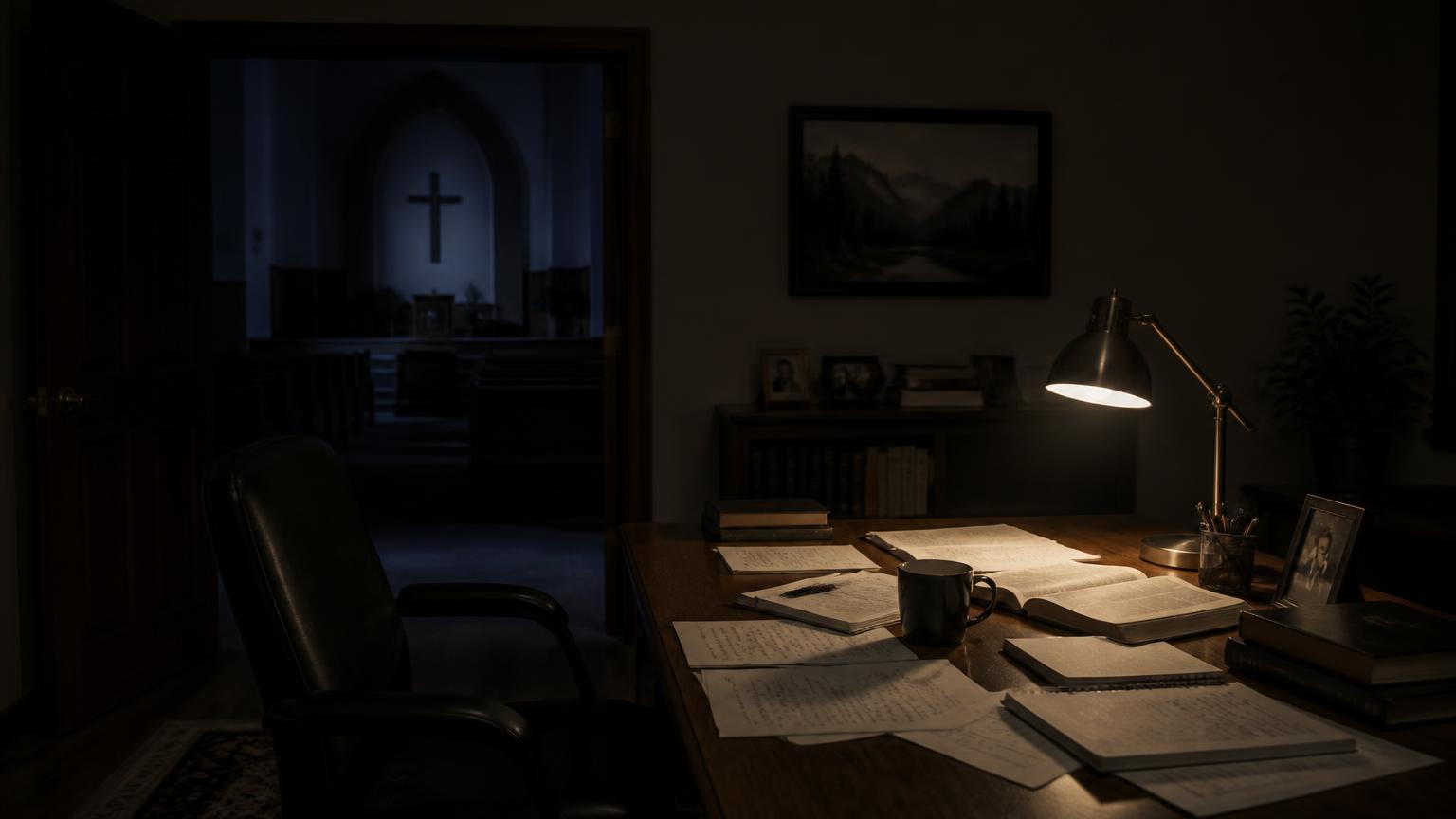
For church employees, the situation becomes even more complicated: the work draining you is the same work covering your electric bill.
Pastoral burnout carries a distinct kind of cruelty. An exhausted accountant can attend church and receive care. An exhausted pastor arrives and gets questioned about parking. Rest and labor occupy the same place, involve the same people, and happen on the same day. There is nowhere separate and safe to come undone.
Ministry burnout includes its own unspoken command to remain silent. Who could you confide in—the elder board responsible for assessing you? A volunteer convinced that you have everything under control? You bear it without speaking, and isolation is what transforms weariness into emptiness.
I have seen people apologize after stepping away from ministry. That reveals how deeply this reaches.
Burning out from church does not mean your faith is gone
This deserves a slower look.
Many people experiencing church burnout privately conclude that they must be moving away from God. Fatigue becomes a judgment on their spirituality: surely, if their belief were genuine, they would want to attend.
Yet physical exhaustion cannot determine what is true. A building may leave you depleted while, at 1am in the darkness, you still reach toward God. Those are not identical realities. One concerns a timetable and a crowded room; the other concerns whether your face remains turned toward something.
At times, exhaustion is the first truthful response you have had in years. Your body finally refuses to continue what your soul stopped consenting to long ago.
That is not wandering away. It is information.
This pace is not being imposed by the Holy Spirit
At some point, a lot of us absorbed the belief that divine approval depends on output. Volunteer more. Agree more often. Always remain reachable. Within church culture, such demands can sound nearly sacred.
But the speed at which you have been living resembles nothing Jesus actually says.
Gentle. Lowly. Rest for your souls. To me, at least, that sounds nothing like the group message seeking someone to handle kids’ check-in.
The Holy Spirit offers steadiness and companionship. Therefore, the panicked voice claiming that any pause equals failure is probably coming from somewhere else. Perhaps it belongs to the surrounding culture. Perhaps it is your fear wearing religious clothing.

Before Elijah received a word, he received a nap
One portion of Elijah’s story catches me every time. Immediately after the book’s most visible spiritual victory, he is found only a few verses later beneath a shrub, isolated and asking for death.
God does not begin by correcting him.
First sleep. Then a meal. Afterward, more sleep. Only later does the well-known quiet whisper arrive, once his physical needs have been treated as significant. Evidently, they are.
If church has exhausted you and God seems impossible to hear right now, this week’s response might be one nap, a proper meal, and an honest talk with someone. The answer may not be greater effort. It may be less.
Two earlier writers who anticipated this
Andrew Murray frequently discussed abiding. At the center of his argument was the idea that nearness to God is somewhere you settle and rest, rather than a rank you earn. Branches do not exert themselves to stay attached to a vine; they remain there. If faith has felt like two years of constant strain, Murray would likely say you have attempted to perform the vine’s work.
A.W. Tozer gave a related warning. In his view, religious activity can easily replace truly knowing God. Because busyness is measurable while intimacy is not, we frequently select activity instead of closeness. Church burnout emerges once the work moves faster than the relationship the work was supposed to support.
What may surprise people is that neither author would prescribe additional effort.
What people genuinely ask about church burnout
Is being burned out from church sinful?
No. Exhaustion is not a moral classification. Shame often appears immediately because many people learned to interpret depletion as disobedience. An empty fuel tank reveals the tank’s condition, not the driver’s character. The emptiness itself matters less than what you choose to do afterward.
How much time does recovery from church burnout require?
More than one weekend, but not forever. Anything narrower would be dishonest. Some begin to feel like themselves after a couple of months. Others may need a year or two, particularly when healing from ministry burnout or employment on a church staff. Usually, recovery starts once you are no longer staging it for other people.
Do I need to leave my church, or should I only step away temporarily?
Taking a break and leaving are separate choices. While you are this depleted, the larger decision does not have to be made. Time away can reveal whether the pace is the issue; departure may deserve consideration if the place itself is the issue. Begin with an actual break, and let somebody know you are taking it. Then others will not be left guessing, and you will not need to conceal it.
What this means for you tonight

I cannot know how severe this has become for you. If ordinary fatigue has given way to wondering whether anybody would notice if you stopped altogether, tell an actual person who is able to be physically present with you. At any hour in the US, call or text 988. This website does not provide that kind of support, and I will not act as though it does.
If, however, you are simply stretched thin and privately ashamed of it, here is what I would offer: you have permission to rest before finding every answer. Solving the situation is not a prerequisite for rest.
Jesus remained in a cave for three days, then emerged beyond it. That is why this site exists. It is also why I cannot believe exhaustion makes you unfit for anything.
Stay parked for however long you need. Below is a brief piece created specifically for a week like this, if you would like something beside you. If you would rather not, I still hope this evening weighs a little less than the one before it.
Leave a Reply