

You know the hallway. Not always a literal one. Maybe it’s a waiting room chair, a stairwell between floors, or 2am on a Tuesday when you’re staring at the ceiling and wondering what you’re doing with your life.
Nothing is exactly wrong. But nothing is happening, either. You’re not where you were, and you’re definitely not where you’re going. You’re just… here, stuck in the part of the story that doesn’t have a name.
If you’ve typed some version of “why do I feel stuck in life, just waiting for something to happen” into a search bar at an hour you’re not proud of, you’re not broken. You’ve found yourself in one of the most disorienting places a person can be: the space between.
The hallway isn’t a metaphor. It’s a feeling.
Psychologists sometimes call this liminal space. The word “limen” means threshold. It’s the feeling of leaving one room before you’ve reached the next. You’re between the job you quit and the one you haven’t found. Between the relationship that ended and whatever comes after it. Between who you were at eighteen and whoever you’re becoming.
Hallways are made to be walked through, not lived in. So when you’re stuck in one emotionally, something in you starts to panic. It feels wrong. Unnatural. Like you’re somehow doing life incorrectly just by standing still.
Here’s the thing almost nobody tells you: that hallway feeling doesn’t mean you’ve failed to move forward. It’s simply what being between two chapters feels like. It’s uncomfortable because it should be temporary, but you have no idea how long “temporary” will last.
Why waiting feels worse than almost anything else
Pain with a clear cause is exhausting, but at least your brain can make sense of it. Waiting has no shape. There’s no task to finish or clear problem to solve. You can’t “get better at” waiting the way you improve at a job or a skill.
So your mind does what minds tend to do when they don’t have enough information. It fills in the blanks with the worst possibilities. What if nothing ever happens? What if I’m the one person this doesn’t work out for? What if I’m just wasting time?
That spiral isn’t a character flaw. It’s what boredom and uncertainty can do to a nervous system that wants an answer and isn’t getting one.
I don’t know what I’m waiting for. I just know I’m not living yet.
If that sounds familiar, name it for what it is. The feeling is real, and it deserves more compassion than you’re probably giving it.
Being stuck and being lazy are not the same thing
Somewhere along the way, many of us picked up the idea that if we’re not visibly progressing, we must be doing something wrong. Maybe there’s no promotion, new relationship, degree, or “glow up” to point to. So the waiting season gets another layer of pain: shame.
Now you’re not just stuck. You’re stuck and failing at not being stuck.
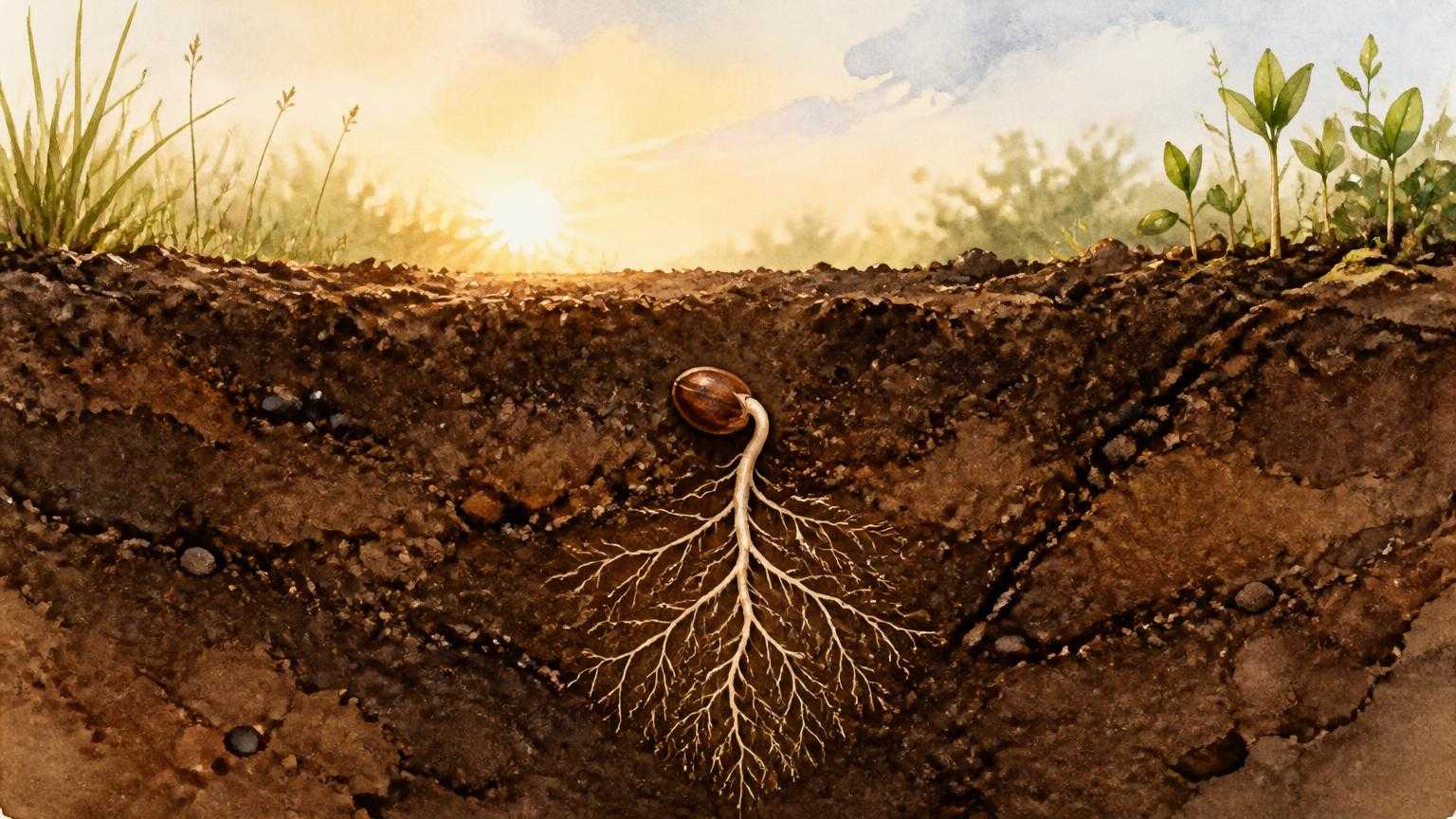
But a waiting season doesn’t always say anything about your effort or your worth. Sometimes it’s simply how long something takes. Seeds don’t look productive underground. Bread dough doesn’t look productive while it sits. Just because you can’t see growth doesn’t mean nothing is happening beyond your view.
That doesn’t mean every waiting season is secretly magical or packed with hidden lessons. Sometimes waiting is just hard, slow, and unfair. You’re allowed to say that without forcing a silver lining onto it.
What actually helps when you’re stuck in the in-between

There’s no trick for making a hallway shorter. A few things can make standing in it more bearable:
- Name the hallway out loud. Say, “I think I’m in a waiting season,” to yourself, a friend, or even a journal. Naming it can take away some of the shame. It stops feeling like a private failure and starts looking like a recognizable human experience.
- Shrink the timeline. You don’t have to figure out your whole future today. You only need to get through today. What’s one small, doable thing in front of you right now?
- Let your body move even if your life feels frozen. Take a walk, have a shower, or clean one drawer. Small physical movement can loosen the feeling that everything, including you, is stuck.
- Watch for isolation. Waiting can make you withdraw right when you need people most. Reach out to someone, even if all you can manage is, “Hey, rough week.”
If that stuck feeling has become something heavier, take it seriously. Flatness that won’t lift, dread that won’t quiet, or thoughts that scare you aren’t things you need to white-knuckle through alone.
Talking to a therapist, doctor, or someone you trust isn’t giving up. Honestly, it may be one of the strongest moves you can make while you’re in the hallway.
You’re not the only one standing here
It may help to know that the hallway feeling is old. Ancient, even. People have described this same ache, being caught between what was and what comes next, for as long as they’ve told stories about their lives.
Some of the oldest stories talk about caves. They were places that felt like dead ends, where someone hid or waited in the dark without knowing what would happen next.
Those stories don’t rush past the waiting. They stay with it. Often, something was quietly happening in the dark long before anyone outside could see it.
You don’t have to believe anything about those stories to find them a little steadying. Sometimes it’s simply good to know someone else has walked this hallway before.
If you’re in one right now, you’re not doing life wrong. You’re just in the part between rooms. That part does end, even when it doesn’t feel like it will.
Leave a Reply