
It’s probably late. You typed something into a search bar you never expected to type: will I go to hell if I doubt God. You weren’t looking for a debate. You just wanted someone to tell you it’s going to be okay.
I think you’re afraid of two things at once. You’re not sure God is real, or at least not sure in the way you used to be. Underneath that is another fear: maybe the doubt itself is the crime. Maybe you’ve offended a God you’re not even sure is listening.
That’s a lonely place to stand. Either way, it feels like you lose.
The Fear Under the Fear
I’m not going to try to prove that God exists. That’s not what you asked, and honestly, it wouldn’t reach the fear underneath your question.
That fear sounds more like this: what if the doubt is what disqualifies me? What if asking the question is the very thing that seals it?
The fear can loop. You doubt, then panic about doubting. Soon you’re wondering whether the panic means you’re already too far gone. It can spin fast enough to make you feel sick.
If you’re there, caught in a loop that won’t let you sleep or think about much else, say it out loud to someone who can help. Talk to a therapist, a counselor, or someone you trust. That isn’t a failure of faith. It’s a sane, strong choice, and it’s one reason HisCave’s resources page exists. We’re companions here, not clinicians. Some loops need more than companionship.
But maybe you’re carrying honest uncertainty, not a spiral. It’s simply a real question sitting heavy in your chest. If so, I want to stay with you there for a minute.
You’re Not the First Person to Ask This
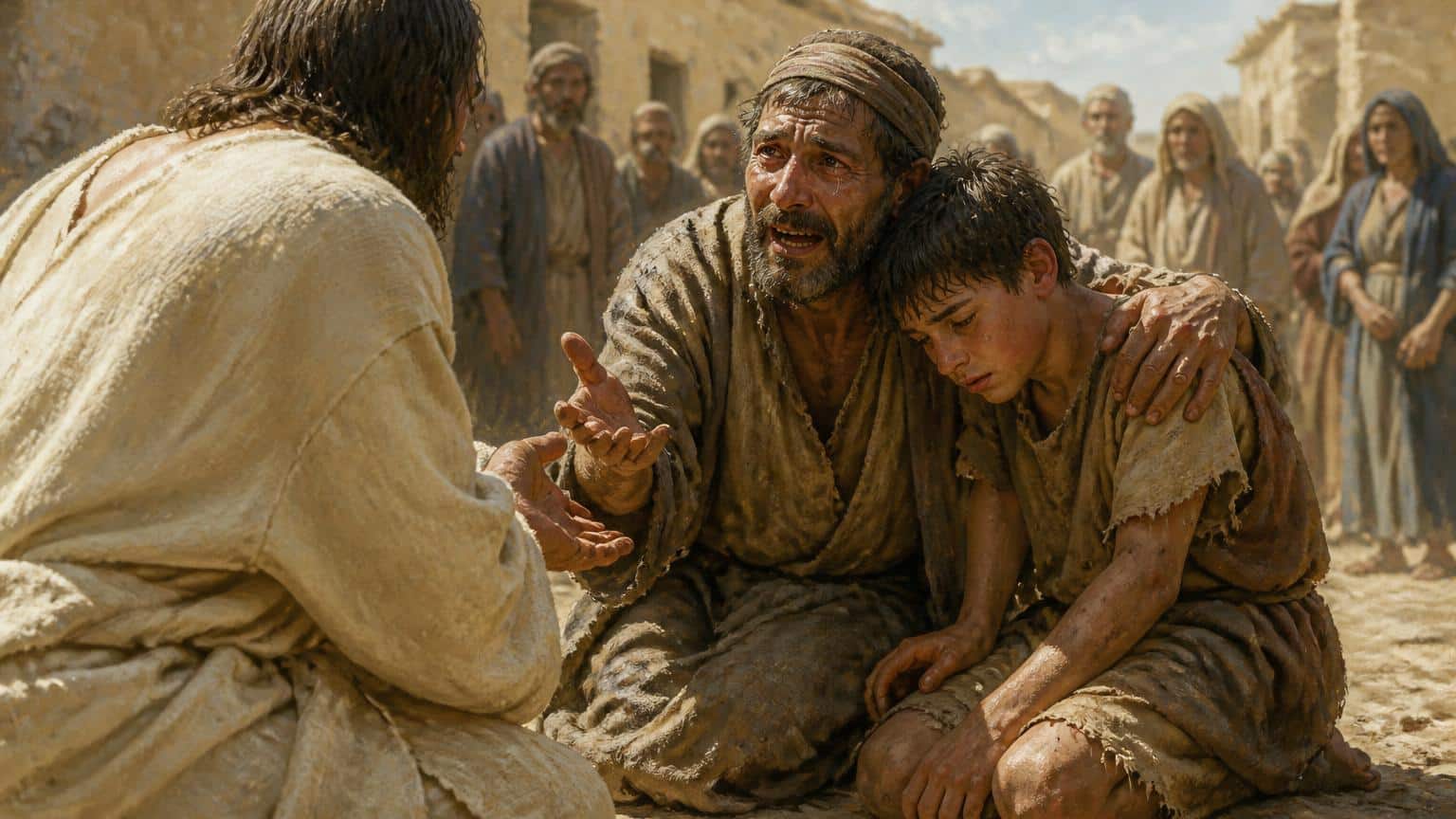
There’s an old account in the middle of one of the Gospels about a father whose son had been sick for years. Violently, frighteningly sick. The father had run out of people to ask for help.
He finds Jesus and says, essentially: if you can do anything, please. Notice that word: if. He’s standing in front of the person he’s asking for a miracle, and he still isn’t sure. He says so out loud, in front of everyone, right to Jesus’s face.
Jesus answers him. Then the father says something that, to me, matters more than almost anything else in the story.
The boy’s father exclaimed, “I do believe; help me overcome my unbelief!”
That’s the whole sentence. Belief and unbelief in the same breath, spoken to God’s face. He doesn’t whisper it in shame or dress it up with an apology. He just says it.
Jesus doesn’t rebuke him. He doesn’t say, “come back when you’re sure.” He helps the boy. The doubt stays in the room while the miracle happens.
What I’m Not Going to Tell You
I’m not going to tell you what happens after you die. I don’t think answering your fear with a verse about hell would settle much. It would only swap one fear for a kind of certainty I can’t honestly give you.
Here’s what I can tell you. In the stories where people admit their doubt to God, even in the worst moments of their lives, they aren’t punished for being honest. They’re met.
That doesn’t mean doubt is meaningless or no big deal. It clearly mattered to that father. He was desperate. But his doubt didn’t stand between him and help.
A Cave With Doubt In It
If you’ve read anything else on this site, you know we keep returning to the cave. It’s the dark place where nothing good seems possible, only to become the place where something is already happening.
Doubt lives in that cave. It’s part of the ground beneath your feet, not a crack that lets danger through. People who’ve wrestled seriously with faith often say their doubt didn’t vanish and leave certainty behind. They simply stopped treating it like something shameful they had to hide.
Even a prophet who once hid in a cave wanting to die wasn’t met with a lecture. His physical needs were cared for, and then came a quiet question. Whatever God is doing with doubt, punishment doesn’t seem to come first.
If this is new territory for you, consider the possibility that doubt might not be the opposite of faith. Maybe the two can exist side by side. You can sit with that for a while. You don’t have to settle it tonight.
Where This Leaves You
I can’t give you certainty about hell. I’d be lying if I pretended otherwise. But the fear you’re carrying, what if the doubt itself is the sin, doesn’t match what happens in the oldest honest prayers we have on record. Those prayers are messy. They say “I believe” and “help my unbelief” in the same sentence. They’re recorded anyway, with no asterisk and no rebuke.
You don’t have to believe any of this for it to matter that you’re not the only person who has asked this exact question in the dark.

If you want one small next step, try saying the father’s words out loud, even if you’re unsure who might hear them. I believe. Help me with what I don’t. You don’t have to mean every word fully. He didn’t either, and it was enough to be in the room.
Leave a Reply